Authenticity Has a New Address: Where Gen Z Went After BeReal Became Just As Fake As Everything Else

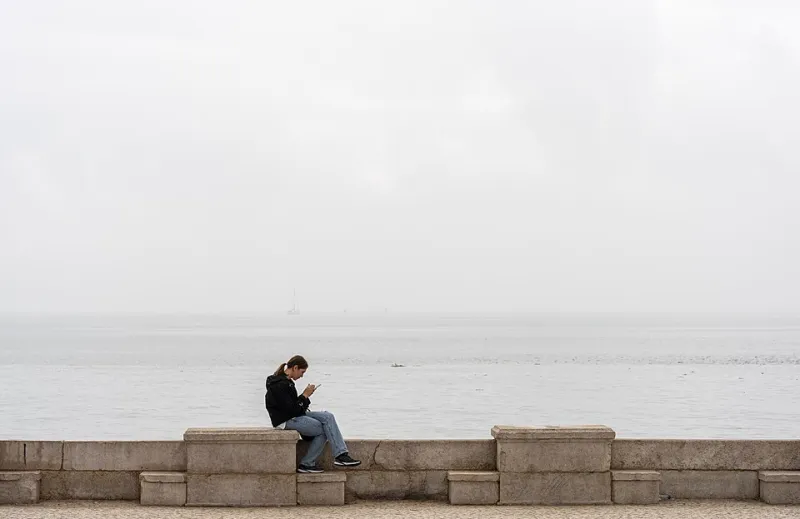
Photo by Photo by Alex Suprun on Unsplash on Unsplash
There's a very specific kind of digital ghost story happening right now, and it involves an app that was supposed to save us from ourselves.
BeReal had a genuinely compelling pitch. Twice a day, at a random time, your phone buzzed and you had two minutes to post an unfiltered photo — front and back camera simultaneously, no editing, no prep, no aesthetic. It was supposed to be the antidote to the exhausting performance of Instagram, a place where people showed their actual lives instead of the highlight reel version.
For a hot second in 2022, it kind of worked. Then, predictably, it didn't.
How BeReal Became the Thing It Was Supposed to Fight
The collapse of BeReal as a meaningful platform didn't happen all at once. It was more of a slow fade — the kind where you keep the app on your phone for months after you've stopped using it because deleting it feels like admitting something.
What killed it? Partly the bots. Partly the fact that people started waiting for the right moment to post their "random" photo — suddenly the two-minute window became a negotiation. Can I just finish this coffee first? Can I at least move to a better-lit spot? The whole architecture of the app assumed people would be okay with being caught in genuinely boring moments, and it turns out most people... aren't.
The deeper issue is that authenticity on social media is almost always a performance. The moment a format becomes popular enough to attract an audience, people start optimizing for that audience. BeReal was never going to escape that gravity. No app is.
By 2024, BeReal's daily active users had cratered, the app was riddled with spam accounts, and the notifications had become the kind of thing you swipe away without thinking, like a weather alert you've stopped caring about.
But the Need Didn't Go Anywhere
Here's what's interesting though: the impulse that made BeReal briefly compelling didn't disappear when the app did. It just scattered.
Gen Z's relationship with "realness" online is genuinely complicated. On one hand, there's a well-documented fatigue with the hyper-polished Instagram aesthetic — the golden hour photos, the carefully arranged flat lays, the abs that required three hours of lighting setup. On the other hand, performing relatability has become its own kind of aesthetic, just as constructed as anything else.
So where does the authentic impulse actually go when the platforms designed to hold it inevitably fail?
The Finsta Is Still Thriving (Just Don't Call It That Anymore)
The "finsta" — the fake Instagram, the private account where you post the stuff that doesn't make the main feed cut — never really went away. It just evolved and spread across platforms.
The energy that used to live in finstas has migrated to close-friends Stories, to private Twitter/X accounts, and increasingly to Bluesky, where a certain kind of oversharing feels more socially acceptable than it does anywhere else right now. Bluesky in 2024 has this early-internet energy where people are posting long, rambling thoughts, sharing mundane life updates, and being openly weird in ways that feel genuinely refreshing after years of algorithmic polish.
It's not that Bluesky is more authentic by design — it's that it's less optimized, which creates space for messiness. That messiness is what people are actually craving.
Discord: The Realest Corner of the Internet Right Now
If you want to understand where authentic online community actually lives in 2024, you have to spend some time in Discord. Not the giant public servers — those have their own performance dynamics. The small, hyperlocal, invite-only ones.
There are Discord communities organized around specific neighborhoods, specific music scenes, specific obsessions that are too niche for any mainstream platform to bother with. And in those spaces, people talk differently. The audience is small enough to feel real, the stakes are low enough that people stop performing, and the format — text-based, asynchronous, not algorithmically amplified — rewards genuine conversation over content.
This isn't new exactly, but the scale at which Gen Z is turning to these micro-communities as their primary social space is notable. When the big platforms feel like Times Square, sometimes you just want a dive bar.
What 'Real' Actually Means to Gen Z in 2025
Here's the uncomfortable insight buried in all of this: Gen Z doesn't actually want unfiltered reality. Nobody does, really. What people want is the feeling of unfiltered reality — the sense that what they're seeing is chosen and shared because it means something, not because it was optimized for engagement.
BeReal failed because it tried to engineer that feeling structurally. But authenticity can't be engineered. The moment a format becomes a formula, it loses the quality it was chasing.
The platforms and formats that are actually scratching that itch right now — close-friends Stories, small Discord servers, Bluesky's chaotic oversharing — work because they're either small enough to feel personal or unpolished enough to feel low-stakes. The second any of them scale up and attract brand deals and algorithmic pressure, the realness evaporates.
It's a cycle that's been repeating since the first person figured out how to make their MySpace page look cooler than their actual life. And it'll keep repeating, because the hunger for connection that feels genuine is one of the most human things about being online.
BeReal is basically a ghost app now. But the ghost it's haunting — the idea that somewhere on the internet, people are just being themselves — isn't going anywhere. It's just moved to a server you probably haven't been invited to yet.