Verified Is Out, Anonymous Is In: How Gen Z Stopped Trusting Influencers and Started Following Strangers
Somewhere between the fifteenth sponsored post and the third "this isn't an ad but" disclaimer, Gen Z collectively raised an eyebrow and logged off. Not off the internet — never that — but off the curated, brand-deal-soaked world of traditional influencer culture. And where did they go? Deeper in. Into the weird corners. The anonymous ones.
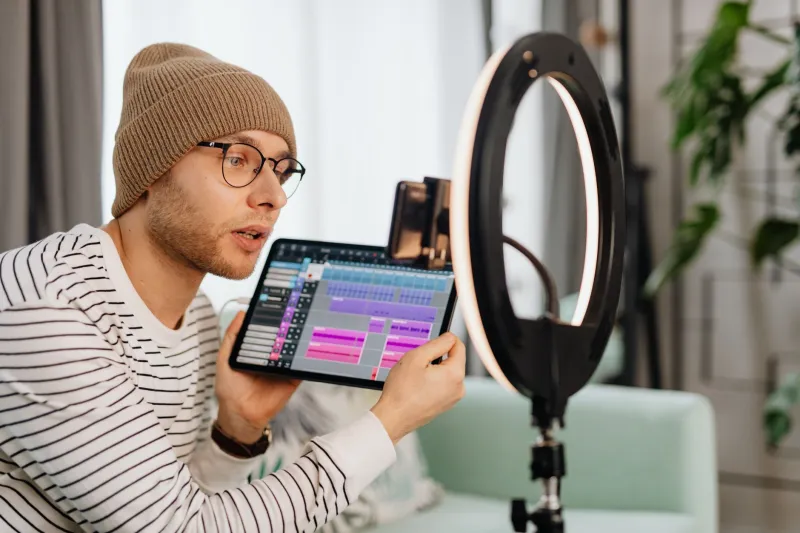
Right now, a 22-year-old in Ohio is more likely to take skincare advice from a faceless Reddit account with 47 karma than from a verified beauty creator with 2 million followers and a glowing ring light. That's not a glitch in the system. That's the system breaking down entirely.
The Trust Deficit Is Real — And It's Been Building for Years
Let's be honest: influencer culture kind of did this to itself. The moment "authentic content" became a marketing strategy, authenticity itself became suspicious. Gen Z — arguably the most media-literate generation in American history — clocked the performance almost immediately. They grew up watching YouTube hauls turn into Amazon storefronts, watching lifestyle bloggers quietly pivot to MLM promotions, and watching every major creator eventually land a brand deal that felt just a little too convenient.
According to a 2023 Edelman Trust Barometer report, younger consumers increasingly trust peers and people "like them" over celebrities and public figures. That tracks. But what's newer, and frankly more interesting, is that "people like them" has expanded to include complete strangers on niche platforms — people whose faces they've never seen and whose real names they'll never know.
The logic isn't irrational. An anonymous poster on a Discord server dedicated to, say, budget cooking or vintage sneaker authentication has no financial incentive to lie to you. They're not getting a cut of your purchase. They're not building a personal brand. They're just... there. Sharing information because they want to. That's a genuinely rare thing in 2024's internet landscape, and Gen Z recognizes it immediately.
Where They're Actually Going
So if not Instagram and TikTok, then where? The answer is everywhere and nowhere specific — which is kind of the point.
Discord servers have quietly become one of the most trusted information ecosystems on the internet. Whether it's a server for a specific video game, a niche hobby, or a tight-knit community around a TV show, these spaces operate on peer-to-peer dynamics. There are no ads. There's no algorithm pushing sponsored content. The most respected voices in those servers aren't verified — they're just consistently helpful or funny or knowledgeable over time. Reputation is earned, not bought.
Then there's the rise of what people are calling "faceless YouTube" — channels that cover everything from personal finance to obscure history to product deep-dives without ever showing the creator's face or revealing their name. These channels often outperform their polished counterparts in one key metric: comment section trust. Viewers aren't projecting a lifestyle onto a human being. They're just absorbing information. It strips the parasocial weirdness out of the equation.
Reddit, of course, remains the granddaddy of anonymous internet wisdom. Subreddits like r/SkincareAddiction, r/personalfinance, and r/AmItheAsshole pull massive Gen Z audiences precisely because the advice is crowd-sourced and contested. Nobody's gospel. Everything gets challenged. That adversarial, self-correcting quality feels more honest than a single creator's carefully edited take.
The Psychology Behind Trusting Strangers Over Stars
Here's the counterintuitive part: the anonymity itself is the feature, not the bug.
Psychologists have long studied something called the "pratfall effect" — the idea that people who show vulnerability and imperfection are often perceived as more trustworthy than those who appear flawless. Influencers, almost by professional necessity, present highly curated versions of themselves. Anonymous internet posters, by contrast, have no image to protect. They'll admit when they were wrong. They'll share failures. They'll get into arguments and sometimes lose them publicly. That messiness reads as genuine.
There's also something to be said about the absence of aspiration. A lot of influencer content is implicitly or explicitly selling you a lifestyle upgrade. The anonymous poster on a niche forum isn't trying to make you want their life — they don't even have a visible life to sell. The interaction is purely transactional in the best possible way: information exchanged, no strings attached.
What This Means for Brands (And It's Not Great News)
If you're a brand that has spent the last five years building an influencer marketing strategy, this trend should be giving you a low-grade headache. The playbook of paying a creator with big follower counts to post about your product is losing effectiveness with Gen Z at a measurable rate.
What's replacing it isn't entirely clear yet, which is part of what makes this moment so chaotic for the marketing industry. Some brands are experimenting with genuine community infiltration — not in a sketchy astroturfing way, but by actually showing up in Discord servers and Reddit threads with real answers and no hard sell. It's slower, less scalable, and harder to measure in a quarterly report. But it's increasingly the only currency that buys credibility with this demographic.
Others are betting on micro and nano influencers — creators with smaller but hyper-engaged audiences who haven't yet been fully absorbed into the brand-deal machine. The logic is sound: a creator with 8,000 followers who only occasionally accepts sponsorships carries way more weight than one with 800,000 who posts a new partnership every other day.
The Bigger Picture
What Gen Z is really doing here isn't anti-social or contrarian — it's adaptive. They've developed finely tuned radar for incentive structures, and they're routing around the ones that feel compromised. The internet gave everyone a platform, and then money showed up and complicated everything. Now a generation raised entirely online is figuring out how to find the signal in an ocean of sponsored noise.
The irony is that the influencers who are thriving right now tend to be the ones who figured this out early — the ones who turned down deals that didn't fit, who showed their receipts, who engaged with criticism instead of deleting it. They're borrowing from the anonymous internet's playbook even while keeping their faces on camera.
Trust, it turns out, was never really about verification badges. It was always about incentives. And Gen Z, scrolling through their third Discord server of the evening, knows exactly who has something to sell them — and who's just talking.