Ten People, Zero Algorithm: Why Gen Z Ditched the Feed and Moved the Party to the Group Chat
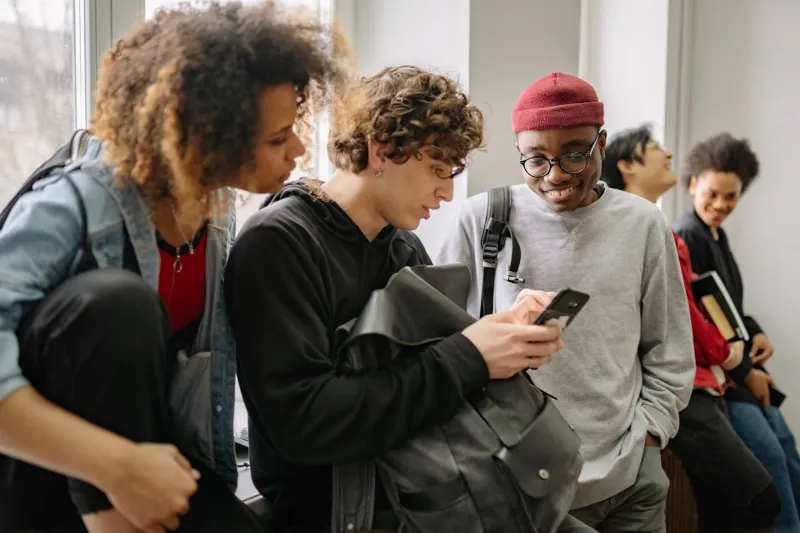
If you've spent any time refreshing your Instagram feed lately wondering why it feels hollow — like a mall food court after 9 PM — you're not imagining things. The energy left. And if you want to know where it went, check your iMessage. Or your Signal. Or that Telegram group your college roommate added you to back in 2022 that somehow became the most important corner of the internet you visit every single day.
Gen Z didn't rage-quit social media. They just quietly relocated.
The Feed Is a Stage Nobody Wants to Perform On Anymore
Here's the thing about public social media in 2024: it's exhausting in a very specific way. Every post is a tiny audition. Every caption is a calculated move. You're not talking to people — you're performing at them, hoping the algorithm decides your content deserves a seat at the table that day. And for a generation that grew up watching influencer culture collapse under the weight of its own inauthenticity, that performance has started to feel like a part-time job with zero pay and constant performance reviews.
So they stopped performing. Or at least, they moved the real show somewhere private.
Group chats — whether that's a tight iMessage thread, a Signal circle, or a Telegram channel that started as a meme dump and evolved into something weirdly meaningful — have become the actual social infrastructure for millions of Gen Z users. Not a supplement to the main feed. The main event.
Why Signal, Telegram, and iMessage Are the New Town Square
Let's talk specifics, because this isn't just a vague cultural vibe shift. Signal's user base has exploded, driven partly by privacy concerns but also by something simpler: people like talking to people they know. Telegram, with its channel and group features, has become a hub for niche communities that would've lived on Facebook Groups five years ago — except nobody under 30 is on Facebook Groups unless they're buying a used couch.
And then there's iMessage, which doesn't get enough credit as a social platform because Apple never called it one. But a well-curated iMessage group chat between close friends operates with all the energy of a great social media platform — reactions, pinned messages, inside jokes that develop their own mythology over months — without a single sponsored post or suggested account breaking the flow.
What all of these have in common is the same thing: intentionality. You don't accidentally end up in a Signal group. Someone put you there. That friction, that small act of curation, is exactly the point.
The 10-Person Rule and Why It Actually Works
There's an informal threshold that keeps coming up when you talk to Gen Z users about their group chat habits. Once a group gets past a certain size — somewhere around ten to fifteen people — it starts to feel like a public space again. The jokes get safer. People start performing. The energy shifts.
Keep it small, though, and something different happens. Conversations move faster and go deeper. People share things they'd never post publicly — not because it's scandalous, but because it's real. Unpolished opinions. Genuine reactions. The kind of stuff that would feel too vulnerable or too niche for a public post but fits perfectly in a space where everyone already knows the context.
This is the part that social media platforms are genuinely struggling to replicate. Instagram tried with Close Friends. Twitter/X has Communities. Discord built its entire brand around it. But there's a trust gap that's hard to engineer when the platform itself has a financial incentive to make everything more public, more shareable, more monetizable. The group chat doesn't have that conflict of interest. It just exists to serve the people in it.
What This Means for the Platforms Chasing Virality
Here's the uncomfortable truth for every social media platform built around the idea of going viral: Gen Z increasingly doesn't want to go viral. Or at least, they don't want their actual life to go viral. They've watched enough people get ratio'd into oblivion, have old tweets resurface, or get cancelled for a joke that landed wrong to understand that public visibility is a liability as much as it's an asset.
The group chat offers something the algorithm fundamentally cannot: plausible deniability. What happens in the Signal group stays in the Signal group. There's no screenshot culture — or at least, there's a social contract against it that carries real consequences. You're talking to people who have your number. Literally.
This shift is already showing up in engagement data that's making platform executives nervous. Time spent on public-facing feeds is plateauing or declining for younger users, while messaging features — DMs, group chats, voice notes — are eating more and more of the clock. Meta knows this, which is why they've been quietly pivoting WhatsApp and Messenger toward features that serve private communities. They can see the migration happening in real time.
The Irony of Social Media Getting More Social by Going Private
There's something almost poetic about the conclusion Gen Z has landed on after growing up as the most chronically online generation in history: the internet is better when fewer people can see what you're doing on it.
The public feed promised connection and delivered performance. The group chat promises nothing except the people already in it — and somehow that's become the more valuable offer. Inside jokes that span years. Shared references that would mean nothing to an outsider. The kind of low-stakes, high-trust communication that used to happen on front porches and in school hallways before everything got a comment section and a view count.
None of this means public social media is dying. TikTok is still printing dopamine. Instagram still shapes culture. But the center of gravity is shifting, and it's shifting toward something smaller, messier, and infinitely more human.
The algorithm gave Gen Z the world. They looked at it, said 'this is too much,' and went back inside with ten people they actually like.
Honestly? That tracks.