Streaming Alone Is So Last Year — Gen Z Made Watching TV a Group Sport
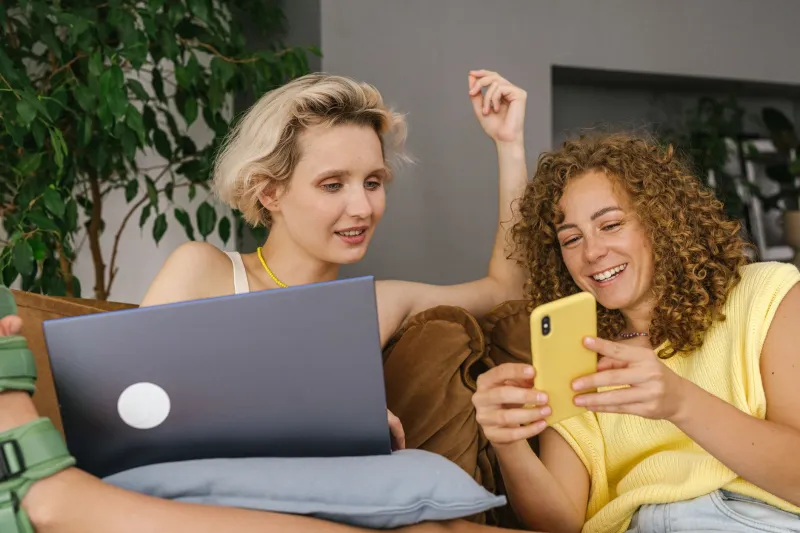
There's a particular kind of loneliness that comes with finishing a show by yourself. You close the laptop, sit in the dark for a second, and then... what? Text someone a spoiler they didn't ask for? Post a vague reaction to your Instagram story and hope someone bites? Gen Z already diagnosed this problem years ago — and the fix they built around it has quietly become one of the most interesting social economies on the internet.
Watch parties aren't new. But the scale, the ritual, and the sheer cultural weight they carry right now? That part is brand new.
From Pandemic Workaround to Full-On Social Institution
When COVID hit and actual hangouts evaporated overnight, platforms like Netflix Party (now Teleparty), Discord, and Amazon's Watch Party feature became emergency infrastructure. People needed to feel connected, and watching the same thing at the same time — even from separate apartments — scratched that itch in a surprisingly deep way.
But here's the thing: the pandemic ended, and the watch parties didn't. If anything, they got bigger.
What started as a workaround evolved into a genuine social format. Discord servers dedicated to specific shows now routinely pull hundreds of concurrent viewers for synchronized episode drops. Twitch streamers host reaction watch-alongs that out-perform their regular gaming content. And on X (formerly Twitter), coordinated live-tweeting sessions around major releases function almost like their own broadcast events — complete with timestamps, custom hashtags, and moderators keeping the chaos organized.
Gen Z didn't just keep the pandemic habit. They upgraded it into something with actual social stakes.
The FOMO Machine Nobody Talks About
Here's where it gets genuinely fascinating from a cultural mechanics standpoint: the watch party economy runs almost entirely on engineered FOMO, and it works incredibly well.
When a show drops and there's a coordinated watch event — say, a popular BookTok creator hosting a live reaction to the first episode of a buzzy adaptation — missing that window isn't just missing a stream. It's missing a moment. The jokes, the timestamps, the shared gasps and the memes that get born in real time. All of that has an expiration date measured in hours, not days.
Platforms have started to figure this out. Netflix has experimented with simultaneous global drops specifically to concentrate conversation into a single window. Disney+ has leaned into the Wednesday release schedule to manufacture weekly appointment viewing. These aren't arbitrary decisions — they're deliberate attempts to recreate the cultural gravity that appointment TV used to generate back when everyone watched the same three channels.
The difference is that Gen Z doesn't just consume that gravity. They produce it, distribute it, and gatekeep it. If you weren't there for the watch party, the group chat already moved on.
Why This Is Replacing the Actual Hangout
Let's be honest about something: coordinating an in-person hangout in 2025 is a logistical nightmare. People live further apart than they used to. Schedules don't sync. Gas is expensive. The couch-to-door ratio of effort-to-reward for a casual hangout has shifted dramatically.
A Discord watch party solves most of that. You show up in pajamas. You can leave quietly if it's not vibing. You can be in four different states and still experience the same jump scare at the same second. And critically — you can screenshot, clip, and post the whole thing while it's happening, turning the hangout itself into content.
That last part matters more than it probably should. For a generation that grew up documenting everything, an experience that generates shareable artifacts in real time is inherently more valuable than one that doesn't. The watch party isn't just social — it's productive. You come out of it with reaction clips, inside jokes, and a shared cultural reference point that functions as social glue for weeks afterward.
Brands Are Circling, and Some of Them Are Actually Getting It Right
Where there's a concentrated cultural moment, brands are never far behind — and the watch party space is no exception. The interesting thing is that the usual playbook (slap a logo on it, pay an influencer, call it a day) genuinely doesn't work here. Watch parties have an authenticity immune system. The community can smell a forced activation from miles away, and they will roast it into oblivion.
The brands that have cracked it — and there aren't many yet — tend to do one of two things. Either they enable the experience without trying to own it (think: a snack brand that quietly sponsors the tech infrastructure for a major creator's watch-along, staying out of the actual content), or they become a genuine part of the cultural conversation by taking real creative swings.
Doritos ran a campaign a few years back that leaned into live social moments in a way that felt native rather than intrusive. More recently, some streaming services themselves have started partnering with creators to host official watch parties as a marketing tool — essentially paying influencers to recreate the organic behavior that was already happening for free. When it's done well, it doesn't feel like an ad. It feels like a better version of the thing you were already going to do.
The brands that will win this space long-term are the ones treating watch parties as a community format rather than an advertising slot.
What This Actually Says About How Gen Z Connects
Zoom out a little and the watch party phenomenon is telling us something pretty significant about how this generation experiences togetherness. Physical proximity matters less than shared experience. Synchronization matters more than location. And the ability to immediately translate a shared moment into content — to prove you were there — is practically a requirement.
There's also something almost nostalgic about it, which is a little ironic. The whole communal TV experience — gathering around a screen together, reacting in real time, talking about it immediately after — is something that technically died with the rise of on-demand streaming. Gen Z just rebuilt it on their own terms, with better tools and a global guest list.
The living room got bigger. The couch got virtual. And somehow, watching TV alone became the weird option.
If you haven't been invited to a watch party lately, you might want to check your Discord notifications. You're probably missing something.